How much does it cost to run a pool hall in India?
Realistic monthly cost ranges for running a pool hall in India: rent, tables, staff, utilities, software, maintenance, and how to model break-even.

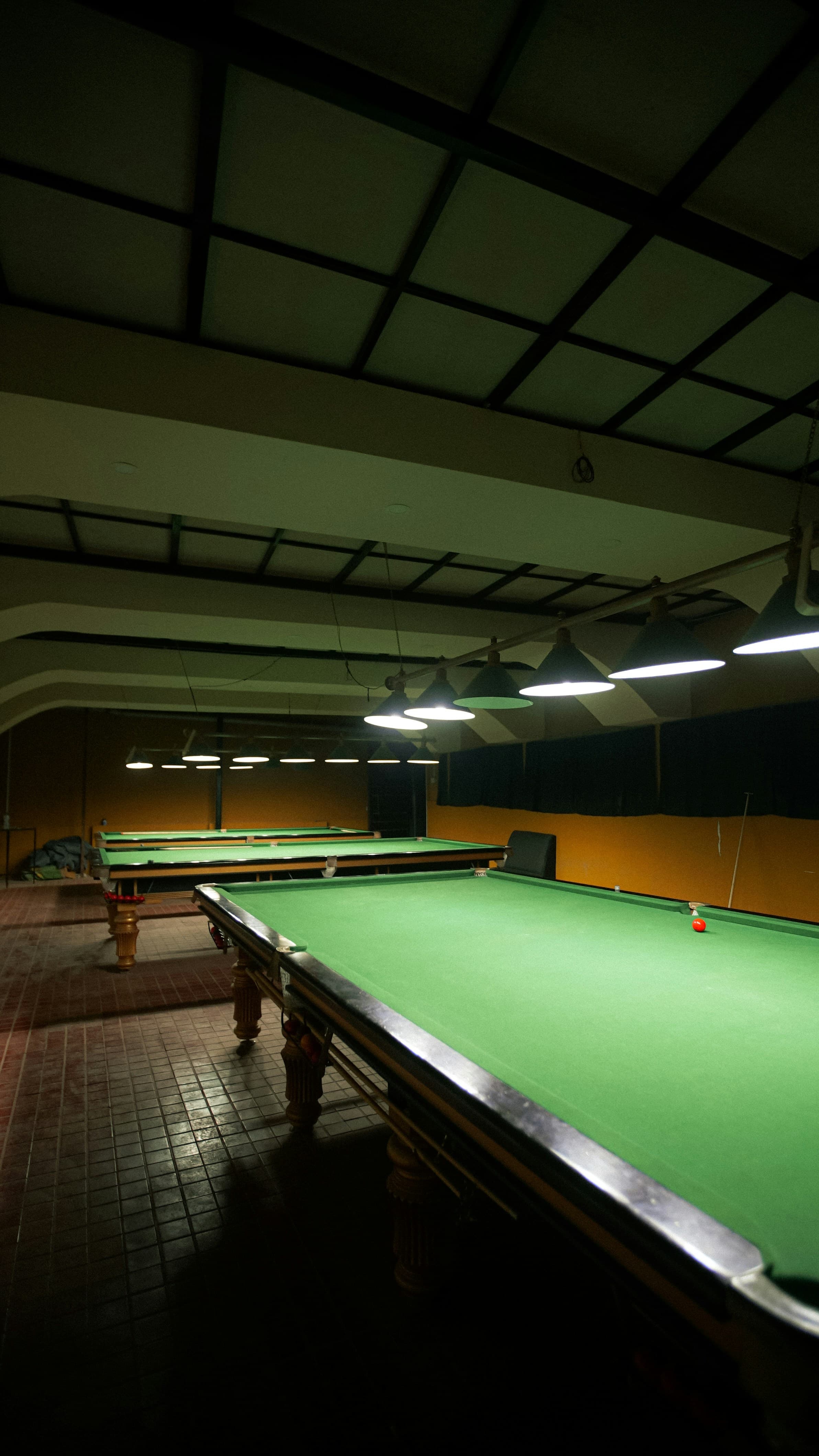
Most people opening a pool hall in India model the revenue side ruthlessly ("six tables, ₹200/hour, ten hours/day, so...") and almost never sit down with the cost side until month four — which is usually when reality hits. This piece lays out the realistic monthly bottom-up cost stack for a representative 6–12 table Indian pool hall, and gives you a framework to model break-even on your own numbers.
All figures are ranges based on observed operating data from Tier-2, Tier-3, and Tier-4 Indian cities in 2025–2026 — the bulk of Strikee's customer base sits in this band. A well-run 4-table tier-4 venue runs its whole floor on ₹40,000–₹50,000 of fixed monthly costs; a 6-8 table tier-2 city operation is closer to ₹1.5–2 lakh. Tier-1 metros run another 30–50% higher again on rent, electricity, and staff. Specifics depend on location, footprint, staffing model, and ambition. Treat the ranges as a sanity check, not a quote.
1. Rent and CAM (₹15,000–₹2,00,000 / month)
Rent is the single largest fixed cost for almost every pool hall and has the biggest variance — easily a 10× swing between a tier-4 small-town venue and a tier-2 prime location:
- Tier-4 small town, first floor or shared building (1,000–1,500 sq ft, 3–4 tables): ₹12,000–₹25,000 / month
- Tier-3 district city, first floor, residential neighborhood (1,500–2,000 sq ft): ₹25,000–₹50,000 / month
- Tier-2 city, first floor, residential neighborhood (1,800–2,500 sq ft): ₹40,000–₹80,000 / month
- Tier-2 city, ground floor, high-visibility (1,800–2,500 sq ft): ₹70,000–₹1,30,000 / month
- Tier-1 metro, first floor, neighborhood (2,500–3,500 sq ft): ₹1,20,000–₹2,00,000 / month
Add Common Area Maintenance (CAM) on top — 10–20% of base rent for commercial properties. Also: most landlords will demand 6–10 months rent as security deposit, so the working-capital hit is twice the annual rent at minimum.
2. Staff (₹12,000–₹70,000 / month)
A typical setup spans from a single owner-marker tier-4 operation all the way to a fully-staffed tier-2 venue:
- Tier-4 small town (3–4 tables, family / owner-run): 1 senior marker doing the floor + owner / family handling the cash; often ₹12,000–₹18,000 / month total wage bill, sometimes effectively ₹0 if the owner is hands-on every shift.
- Tier-3 district city (5–6 tables): 1 senior marker (₹12,500–₹17,000) + 1 junior marker (₹8,000–₹12,000) ≈ ₹22,000–₹29,000 / month.
- Tier-2 city (6–8 tables): 1 senior marker, 1–2 junior markers, 1 cashier (₹10,000–₹15,000), part-time cleaning (₹3,000–₹6,000) ≈ ₹40,000–₹50,000 / month.
Tier-1 metro rates can run 40–60% higher across every line above — useful to know if you're considering opening in a city like Mumbai or Bangalore.
Don't under-pay your senior marker. The difference between a ₹13k marker and a ₹17k marker is 10–15% in monthly revenue from better customer handling and fewer credit-ledger errors alone.
3. Electricity (₹8,000–₹55,000 / month)
Pool halls are surprisingly power-hungry — lights over each table, air-conditioning for the whole footprint, ceiling fans, charging points, a small kitchen if you have one.
- Tier-4 small venue (3–4 tables, AC only in peak summer): ₹8,000–₹15,000 / month average across the year.
- Tier-3 mid-size venue (5–6 tables): ₹18,000–₹28,000 / month.
- Tier-2 full-size venue (2,500 sq ft, 6–8 tables, AC on for 8 of 12 daily hours): ₹35,000–₹55,000 in summer months, ₹25,000–₹35,000 in milder months.
Tier-1 metros pay 20–30% more per unit on top of the figures above.
4. Table maintenance (₹3,000–₹15,000 / month, smoothed)
Cloth replacement is the recurring big-ticket item. A 12-foot snooker table costs ₹6,000–₹10,000 to re-cloth, and you'll do it every 9–15 months at a busy table. Cue tip replacements, rest repairs, ball polishing — budget ₹500–₹1,500 per table per month on a steady-state basis.
For 6 tables: ₹6,000–₹15,000 / month is the realistic smoothed cost. Treat it as fixed, not variable — neglecting it kills the customer experience faster than any other single thing.
5. Software and tooling (₹500–₹6,000 / month)
This is where most clubs "save" by using paper chits and an Excel sheet — and then lose 5–15x the savings to shrink, bad pricing, and missed credit balances. Realistic software costs:
- Free / paper / Excel: ₹0 (with hidden costs above)
- Strikee (public beta): ₹399 / month or ₹3,999 / year (14 months for the price of 10) — full session tracking, credit ledger, tournaments. See pricing.
- Generic restaurant POS (with workarounds): ₹2,000–₹5,000 / month plus transaction fees
The headline ₹500/month floor in the section heading is realistic: Strikee at ₹399 plus a basic broadband connection (~₹1,000 fixed across the venue, ~₹100 attributable to software/POS) gets you to ₹500 without any other software spend. Optional add-ons:
- CCTV subscription (if you run a cloud-NVR plan): ₹500–₹1,500 / month
- Accounting software (if you don't handle GST manually): ₹500–₹2,000 / month
- High-speed broadband, if you want a separate dedicated line: ₹1,200–₹2,500 / month
6. Refreshments cost of goods (varies)
Most pool halls run a small refreshments counter — chai, soft drinks, cigarettes, packaged snacks. If you do, food & beverage becomes a separate margin line. Typical Indian pool hall F&B margins:
- Beverages: 60–70% gross margin
- Packaged snacks: 25–35% gross margin
- Cigarettes: 8–15% (highly regulated; many states restrict sale)
F&B can contribute 15–30% of total venue revenue if managed well. Track it separately from table revenue in your software.
7. Compliance, taxes, accounting (₹1,000–₹15,000 / month)
Don't skip this line. GST returns, professional tax, shop licence renewals, FSSAI renewals, occasional fire NOC inspections. Tier-4 owners doing the filings themselves with a quarterly CA review get away with ₹1,000–₹2,000 / month effective spend. A part-time CA who knows hospitality runs ₹3,000–₹8,000 / month for a tier-3 venue, ₹10,000–₹15,000 once you cross ₹50 lakh annual turnover.
8. Marketing (₹0–₹25,000 / month)
Most successful clubs spend less on paid marketing than you'd think — the medium is Instagram, WhatsApp, and word-of-mouth via tournaments. Budget ₹0–₹10,000 / month for steady-state marketing plus ₹15,000–₹40,000 per major tournament you run.
9. The realistic monthly cost stack
Putting it together for three representative venues — a 4-table tier-4 small-town setup, a 6-table tier-3 district city venue, and a 6-8 table tier-2 mid-city venue in 2026:
| Line | Tier 4 (small town, 4 tables) | Tier 3 (district, 6 tables) | Tier 2 (mid-city, 6-8 tables) |
|---|---|---|---|
| Rent + CAM | ₹15,000 | ₹40,000 | ₹80,000 |
| Staff | ₹15,000 | ₹25,000 | ₹45,000 |
| Electricity | ₹10,000 | ₹22,000 | ₹40,000 |
| Table maintenance | ₹3,000 | ₹6,000 | ₹10,000 |
| Software & tooling | ₹500 | ₹1,500 | ₹3,500 |
| Compliance / accounting | ₹1,000 | ₹3,000 | ₹6,000 |
| Marketing | ₹0 | ₹5,000 | ₹10,000 |
| Total / month | ₹44,500 | ₹1,02,500 | ₹1,94,500 |
The tier-4 column above lines up with what we see at real operating clubs in our customer base — well-run small-town venues genuinely run their floor on ₹40,000–₹50,000 of fixed costs each month. The Strikee founder's original 4-table venue in Gujarat ran on numbers in this band for two years; the model works if you keep staffing tight and pick a building that doesn't eat half your gross.
For tier-1 metros, add 30–50% on top of the tier-2 column on rent, electricity, and staff (table maintenance, software, and compliance scale less aggressively).
At ₹1 lakh monthly fixed costs (tier-3 realistic), you need ~₹3,300 / day in gross margin contribution from tables to break even — which translates to about ₹4,000–₹5,000 / day in gross revenue depending on your pricing model. Tier-4 break-even is closer to ~₹1,500 / day in gross margin, or ₹1,800–₹2,200 / day in gross revenue, which a 4-table venue can hit comfortably with ~8 paid table-hours / day.
Break-even modelling
Take your realistic monthly cost stack. Divide by 30 to get daily cost. Divide by your average gross margin (typically 80–90% on tables, 30–60% on F&B blended). That's your daily revenue floor.
If you'd rather not do this on paper, our profit & break-even calculator walks you through the same math with your own numbers and spits out the daily revenue floor, the break-even table-utilisation percentage, and a monthly P&L projection. And if you're at the planning stage and haven't sized the opening capex yet, the opening-cost estimator covers the one-time spend on tables, fit-out, licences, and deposit before you ever pay your first month's rent.
Now ask: at your pricing model and projected utilisation, can your tables hit that number even on a slow Tuesday? If no, you don't have a viable business — you have an expensive hobby. The fix isn't more marketing; it's a different cost stack (smaller footprint, fewer staff, cheaper rent).
Where most clubs leak money
After two years running a club and watching peers open and close, the patterns are consistent. Money leaks from:
- Credit balances nobody tracks (5–10% of monthly revenue)
- Frame / hour counts disputed at billing (3–8% of monthly revenue)
- Tournament finances run on WhatsApp groups (sponsorship money lost in transit, 100% of the time)
- Over-staffed slow days you never reviewed (10–15% of staff cost)
- Electricity bills you didn't shop for a competitive tariff on (5–15%)
The first three are exactly the categories Strikee solves — see the features overview. The other two are operational discipline. Both are worth real time.
Run your venue on Strikee
Customer tracking, daily cashbook, credit ledger, tournaments — all in one app.